
Does Your Air Conditioner Smell? Causes and Solutions for Unpleasant AC Odors

Unpleasant odors from the air-conditioning system can make every drive uncomfortable. Whether the smell is musty, moldy, or rotten, a foul-smelling car air conditioner usually indicates more than just a temporary issue. A common cause is dirt and microorganisms inside the air-conditioning system. The evaporator and the area around the cabin air filter are particularly susceptible, as moisture, dirt, and organic deposits can accumulate there.
This article explains why car air conditioners can develop unpleasant odors, the potential risks involved, and how to eliminate these odors professionally.
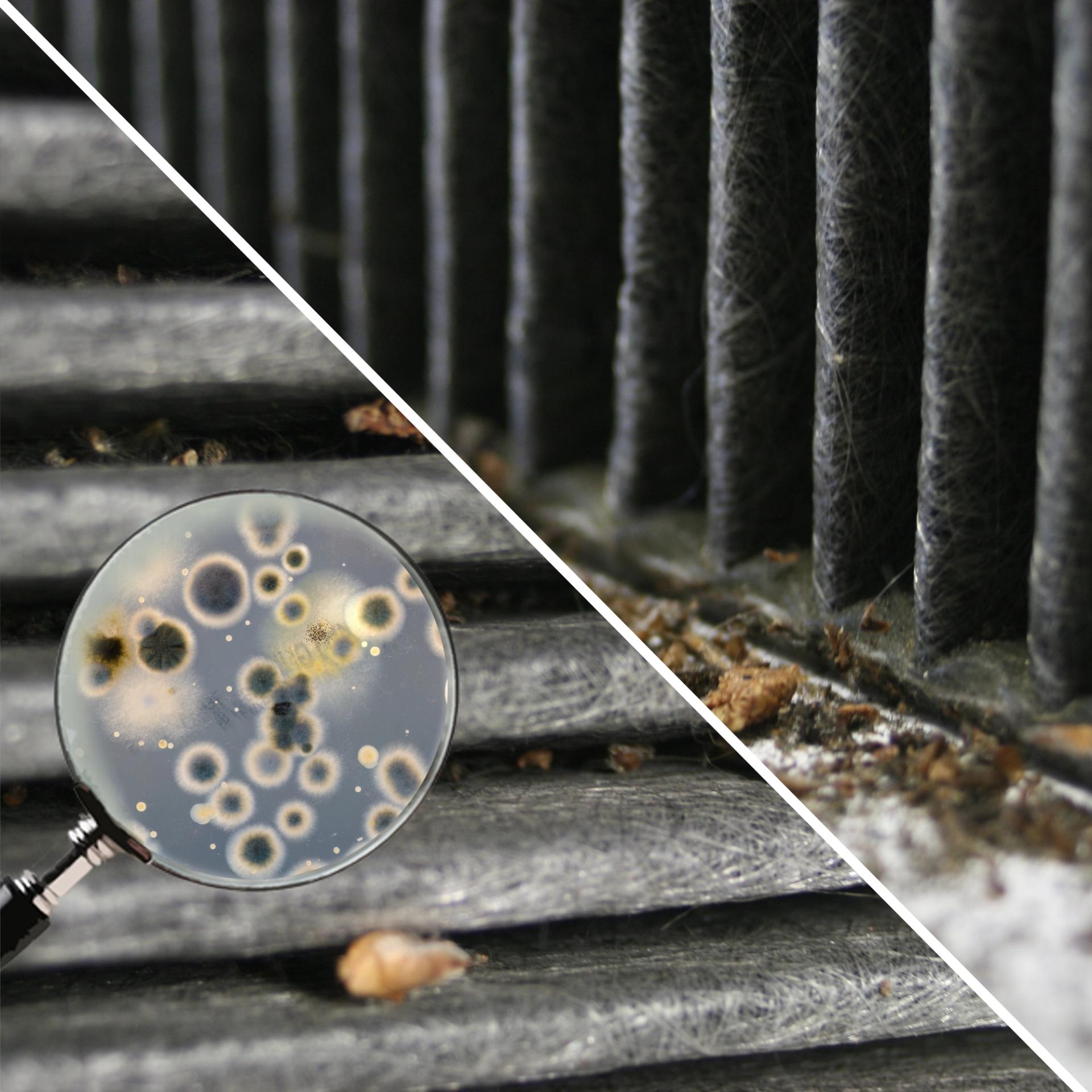
Why does the air conditioning in the car smell bad?
Many drivers notice this odor when they first turn on the air conditioning after the vehicle has been parked for a long time. The problem often lies not with the air conditioner itself, but with the components that channel air into the cabin.
During operation, the evaporator produces condensate. This moisture cannot be completely drained away, and some remains on the closely spaced cooling fins. When the condensate mixes with dust, pollen, and dirt, it creates a damp environment that provides ideal conditions for bacteria, fungi, and other microorganisms to grow. These microorganisms adhere to moist surfaces and form what is known as a biofilm: a thin layer composed of microorganisms, the slimy substances they secrete, corrosion products, and inorganic deposits. This biofilm produces a characteristic unpleasant odor and, depending on how accessible the affected surfaces are for cleaning, is often difficult to remove completely.
Important: Biofilm may form well before any unpleasant odor becomes noticeable. Therefore, even if vehicle occupants are completely unaware of it, the air-conditioning system may already be contaminated with microorganisms.
The most common causes of unpleasant odors
Dirty evaporator
The evaporator is one of the most critical components affecting hygiene in a vehicle’s air-conditioning system. Since there is no additional filter layer between the evaporator and the point where air enters the passenger compartment, contaminants that form on the evaporator can enter the vehicle unobstructed. The continuous formation of condensation causes dust particles, pollen, and microorganisms to accumulate. Over time, this creates a biofilm that not only produces unpleasant odors but may also affect the air quality inside the vehicle.
Contaminated pollen filter housing
Many car owners regularly replace their cabin air filters, but one thing is often overlooked: the pollen filter housing also gets dirty, partly because particles can fall into it when the filter is replaced. The buildup of dust, pollen, and moisture creates an environment inside the housing where germs and bacteria can thrive. If only the filter is replaced, the actual source of unpleasant odors will remain around it.
Condensate drain pipe blockage
To ensure the air conditioning system operates properly, condensation produced during operation must be able to drain freely through the designated drain hose. If the drain hose is partially or completely blocked, moisture can become trapped inside the system, promoting microbial growth and potentially causing unpleasant odors over time.
Can an air conditioner that smells bad be harmful to your health?
Unpleasant odors from a car’s air conditioning system should not be ignored. During a drive of just ten minutes, a person can inhale more than 70 liters of air that enters the vehicle through the air conditioning system. Depending on the weather, driving habits, and air conditioning usage, harmful bacteria, pollen, invisible germs, and mold can quickly accumulate on the evaporator and around the cabin air filter, posing a health risk every time the vehicle is driven—sometimes even before any unpleasant odor becomes noticeable.
The following groups are generally particularly sensitive:
- Patients with allergies
- Children (among whom the prevalence of allergic diseases has risen particularly sharply over the past several decades)
- Older adults
- People with respiratory diseases
Therefore, keeping the air conditioning system clean and hygienic not only enhances comfort but also helps improve the air quality inside the vehicle.
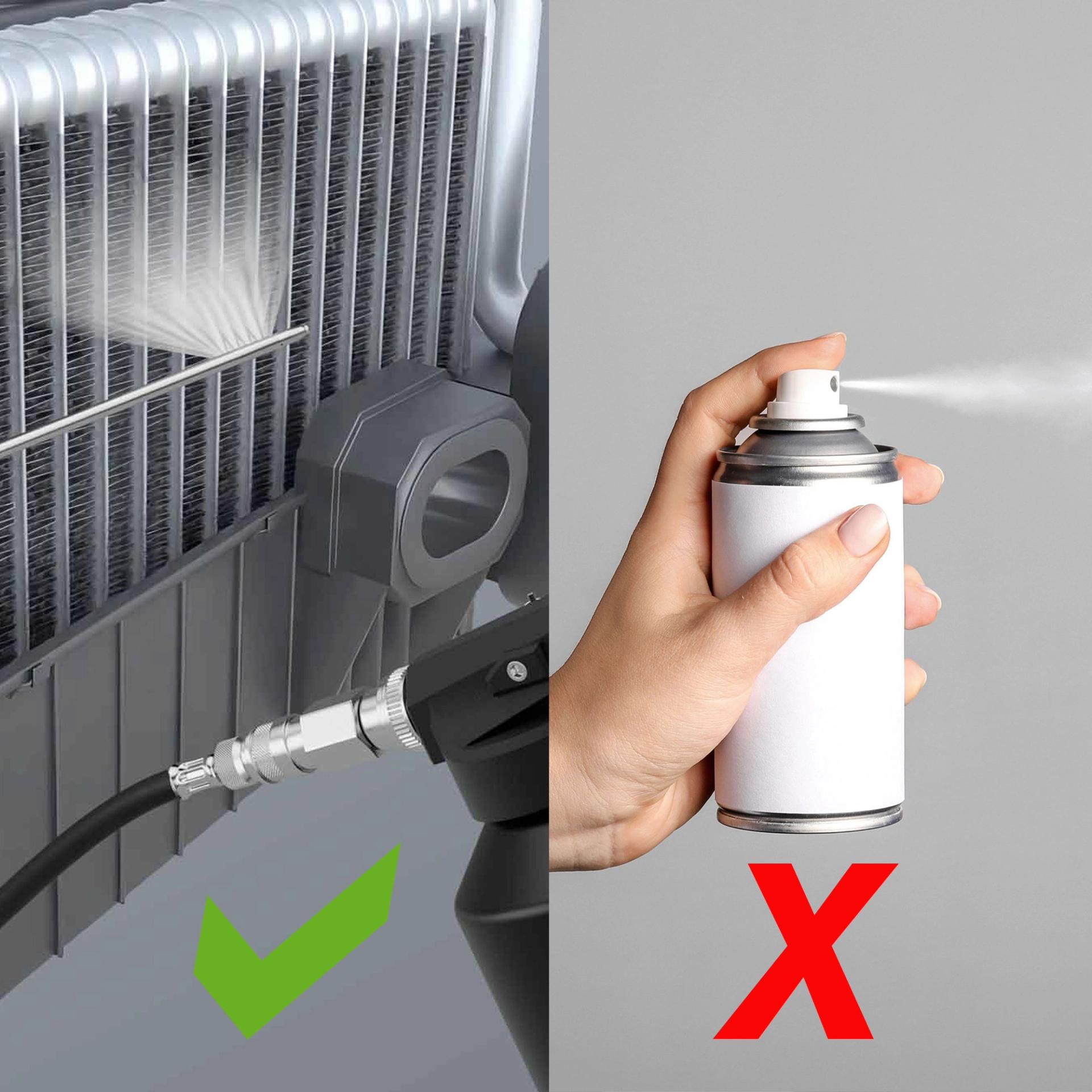
How can I get rid of this smell?
- Check the cabin air filter:A dirty or worn-out cabin air filter can intensify unpleasant odors and reduce air quality. Therefore, inspect the filter regularly and replace it according to the manufacturer's recommendations.
- Odor-masking agents are not a long-term solution—and some may even cause problems:There are many sprays, ultrasonic nebulizers, and so-called pressurized can products on the market that claim to clean or disinfect air-conditioning systems. However, a workshop test we conducted on pressurized can products showed that the vehicle’s air-conditioning system was not actually cleaned or disinfected after use. In some cases, the concentration of bacteria in the outgoing air was even higher after cleaning than before, apparently because the bacteria had not been killed but merely “disturbed” and dispersed. In addition, even after ventilating for the prescribed amount of time, the air quality inside the vehicle was still significantly degraded by gaseous pollutants. Ultrasonic atomization of liquids likewise cannot remove and expel contaminants: they remain in the system, while fragrances and cleaning agents may be deposited, further increasing air pollution inside the vehicle. These methods do not address the actual causes, such as dirt in the evaporator or pollen filter housing, so unpleasant odors often return.
- Professional air conditioning cleaning:For long-lasting results, odors must be eliminated directly at their source, particularly by cleaning the evaporator and the area around the pollen filter. An effective cleaning process combines mechanical and chemical methods: cleaning fluid is sprayed under pressure onto the evaporator surface to dissolve dirt and biofilm, then thoroughly flush them out of the evaporator's fin structure. Contaminants inside the pollen filter housing are dissolved with a cleaning agent and then wiped away with cleaning tools, leaving no residue. Procedures that comply withVDI/ZDK Guideline 6032requirements deliberately avoid the use of biocides and fragrances, ensuring that surfaces, coatings, seals, and sensors within the system remain unaffected.

How to prevent the air conditioner from smelling bad again
By taking a few simple measures, you can significantly reduce the risk of unpleasant odors developing:
- Use the air conditioner regularly: Even during the colder months, you should turn on the air conditioner regularly. This helps dehumidify the air and reduces moisture buildup within the system.
- Replace the cabin air filter regularly: A clean cabin air filter that is replaced on schedule can reduce the amount of dust and pollen entering the climate control system, helping to improve the air quality inside the vehicle.
- Regularly clean the air-conditioning system: VDI/ZDK 6032 GuidelinesWhenever the pollen filter is replaced, it is recommended that the air-conditioning evaporator and pollen filter housing also be cleaned. This removes the source of unpleasant odors before they can develop. The exact maintenance interval should be agreed upon with the repair shop in accordance with the manufacturer’s specifications and the currently applicable version of the guidelines.
Does your air conditioner smell? Take care of it promptly.
If your air conditioning gives off an unpleasant odor, it is usually caused by dirt accumulating on the evaporator or inside the cabin air filter housing. Moisture, dust, bacteria, and mold can form a biofilm in these areas, producing unpleasant smells—often before you even notice them. Sprays, pressurized deodorizer cans, and ultrasonic foggers can, at best, only mask the problem temporarily and may further contaminate the air inside the vehicle. Only thorough chemical and mechanical cleaning by a professional can eliminate the problem at its source, leaving the cabin air cleaner and helping to improve air quality.
Would you like to permanently eliminate unpleasant odors?
➡ Find a repair shop near you now and have a professional clean your air conditioning system.
Frequently Asked Questions
Do you have any other questions?
You can find more questions and answers in our FAQ.
More guide articles

- Healthy air in the car
Does the car air conditioning smell?
✅ Where smells from the car air conditioning come from ✅ What can be done about it ✅ What helps against musty smells!

- Facts worth knowing
- Healthy air in the car
Disinfecting car air conditioning? Why it's not a good idea – and what really helps
Many drivers are familiar with the problem: When the air conditioning is turned on, it smells bad, emitting an unpleasant odor of vinegar, cheese, or even urine. The first reaction is often: "I need to disinfect the air conditioning!" – but be careful: Disinfecting the air conditioning with aggressive chemicals can do more harm than good.

- Wissenswertes
- Gesunde Luft im Auto
When and where should you have your car’s air conditioning system professionally cleaned?
A clean car air conditioning system ensures better air quality, greater comfort, and protects your health. But when is the right time for a cleaning – and why are simple solutions often not enough? This article explains how often professional cleaning makes sense, what risks a dirty system entails, and what you should look out for when choosing a workshop.

- Wissenswertes
Was kostet eine professionelle Klimaanlagenreinigung?
Eine professionelle Klimaanlagenreinigung sorgt für saubere Luft im Fahrzeug und schützt vor Bakterien, Keimen und unangenehmen Gerüchen. Der Artikel zeigt, welche Kosten dabei typischerweise anfallen, welche Faktoren den Preis beeinflussen und warum eine regelmäßige Reinigung entscheidend für Gesundheit und Fahrkomfort ist.