
Car Air Conditioning Cleaning Guide: Step by Step to a Clean Vehicle Air Conditioning System

A pleasantly cool temperature inside the vehicle in summer and fog-free windows in winter—air conditioning is now standard equipment in almost every vehicle. However, many drivers only think about cleaning the air-conditioning system when unpleasant odors arise. Over time, dirt, pollen, moisture, and microorganisms accumulate in the system, particularly on the evaporator and in the cabin air filter housing.
The result: poorer air quality, unpleasant odors, and increasing discomfort for drivers and passengers. In this article, you will learn why it makes sense to clean your air conditioning system regularly, how professional cleaning generally works, and how to find the right instructions for your vehicle.

Why should you clean the air conditioner?
During operation, moisture continuously forms on the evaporator. Together with dust, pollen, and other particles, it creates an ideal breeding ground for bacteria, fungi, and microorganisms. At the same time, contaminants accumulate in the pollen filter housing—both of which can noticeably impair the air quality inside the vehicle.
People with allergies in particular are advised to have their air conditioning system cleaned regularly. The airco well® cleaning process was specially developed for hygienic cleaning, contains no fragrances or colorants, and is therefore particularly allergy-friendly—as certified by ECARF.
Typical signs of a dirty air conditioning system:
- Musty or moldy smell when switched on
- Declining cooling performance
- Increased dust levels inside the vehicle
- Frequently fogged-up windows
- Allergic symptoms while driving
These symptoms usually only appear once significant contamination has already built up in the system.
When should the air conditioner be cleaned?
According to the VDI/ZDK Guideline 6032, the pollen filter housing and evaporator should be cleaned whenever the cabin air filter is replaced—at least every 12 months.
Cleaning is particularly recommended:
- Before the start of summer and winter
- After the vehicle has been parked for an extended period
- For unpleasant odors
- For allergy sufferers
- When buying a used car
How to Clean an Air Conditioner – Step by Step
There is no universal step-by-step guide for cleaning a vehicle's air-conditioning system. Access to the evaporator—and therefore the required work steps—varies depending on the manufacturer, model, and year of manufacture. For this reason, different vehicles require their own cleaning methods and vehicle-specific work instructions.
In general, however, professional air conditioning cleaning can be divided into several key components:
Component 1: Check and replace the cabin air filter
The cabin air filter, also known as the pollen filter, traps a large proportion of the dust and dirt particles in the outside air. To ensure it continues to work reliably, it should be checked regularly and replaced as needed. A new filter helps improve the air quality inside the vehicle.
Part 2: Cleaning the pollen filter box
Replacing the cabin air filter alone does not complete the job. Leaves, dust, pollen, and other debris often accumulate in the pollen filter housing. If these contaminants are not removed, the new filter can become clogged again almost immediately. That is why cleaning the pollen filter housing is an essential part of a professional air-conditioning system cleaning.
Part 3: Cleaning the evaporator
The evaporator is one of the hygiene-critical components of a vehicle's air-conditioning system. The combination of moisture and dirt can cause deposits and biofilms to form there. Professional cleaning removes these contaminants directly from the evaporator and can therefore often eliminate the source of unpleasant odors.
Component 4: Functional Test
After cleaning, the air conditioning system is checked to ensure it is functioning properly. This includes checking the airflow, cooling performance, and any odors.
How the air conditioning cleaning process works
Below, we have provided a clear summary of the individual steps involved in professional air conditioning cleaning. The video shows the basic cleaning process step by step.

Find the right cleaning instructions for your vehicle
As shown in the video, professional air-conditioning cleaning involves several important steps. However, the exact procedure—and especially how the evaporator is accessed—varies depending on the manufacturer, model, and year of manufacture. Therefore, there are different cleaning methods and vehicle-specific instructions.
To help workshops and vehicle owners quickly find the right air conditioning cleaning instructions, airco well® offers a practical instruction finder. Simply select the vehicle type, make, model, and year—and the appropriate cleaning method and vehicle-specific step-by-step instructions, including a video, will be displayed.
This saves workshops time in particular: the right work instructions are available immediately.
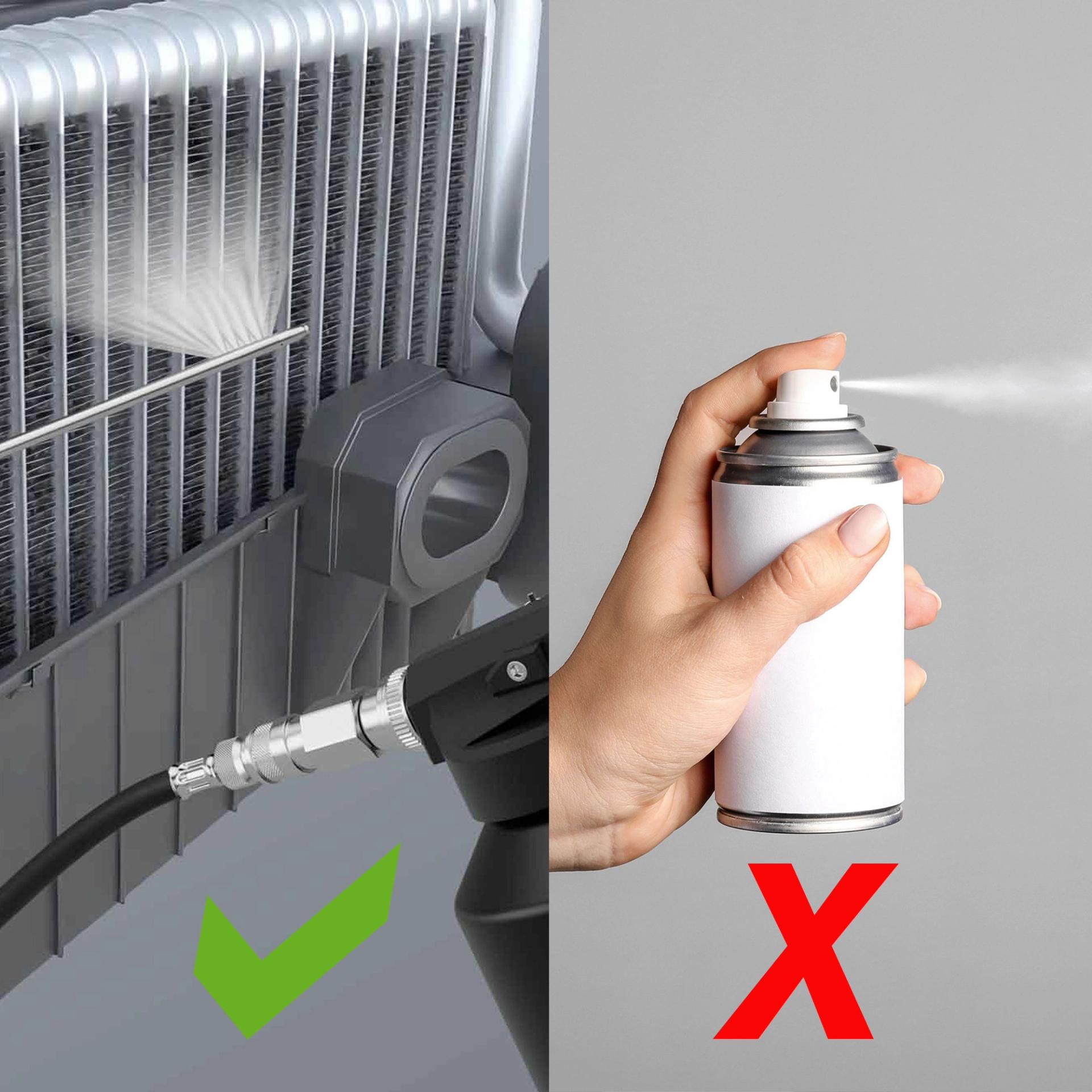
Clean the air conditioner yourself or have it professionally cleaned?
Numerous cleaning sprays, aerosols, and so-called click cans are commercially available. These products can reduce odors in the short term, but often do not reach either the evaporator or the cabin air filter housing directly. As a result, the underlying cause of the contamination often remains.
A professional air conditioning cleaning service, on the other hand, includes cleaning the components relevant to hygiene:
- Cleaning the pollen filter box
- Cleaning the evaporator
- Replacing the cabin air filter
Only the combination of these measures corresponds to the cleaning approach described in the documentation in accordance with VDI/ZDK 6032.
What matters when cleaning an air conditioning system
In summary, the key components of a clean vehicle air-conditioning system are shown here: from replacing the cabin air filter and cleaning the pollen filter housing to cleaning the evaporator. Anyone who addresses all of these components goes significantly further than simply replacing the filter. As already explained, most potentially harmful contaminants accumulate precisely in the pollen filter housing and on the evaporator.
Since access points and work procedures vary from vehicle to vehicle, it is advisable to use vehicle-specific instructions. Regular and thorough cleaning can help improve the air quality inside the vehicle, reduce sources of odors, and maintain the long-term performance of the air conditioning system.